

“This is what we call a homicide… May pumatay eh. Wala bang accountability?”
A little over two weeks have passed since the military operation in Toboso, Negros Occidental, which led to the killings of 19 people, including two University of the Philippines students, a community journalist, two Filipino-American activists, two peasant advocates, and several others. Yet the conflicting accounts, especially from the Armed Forces of the Philippines (AFP), leave more questions unanswered, which give rise to harder questions about the truth behind the tragic incident.
For forensic pathologist Dr. Raquel Fortun, this underscores the urgent need for an independent, science-based forensic investigation.
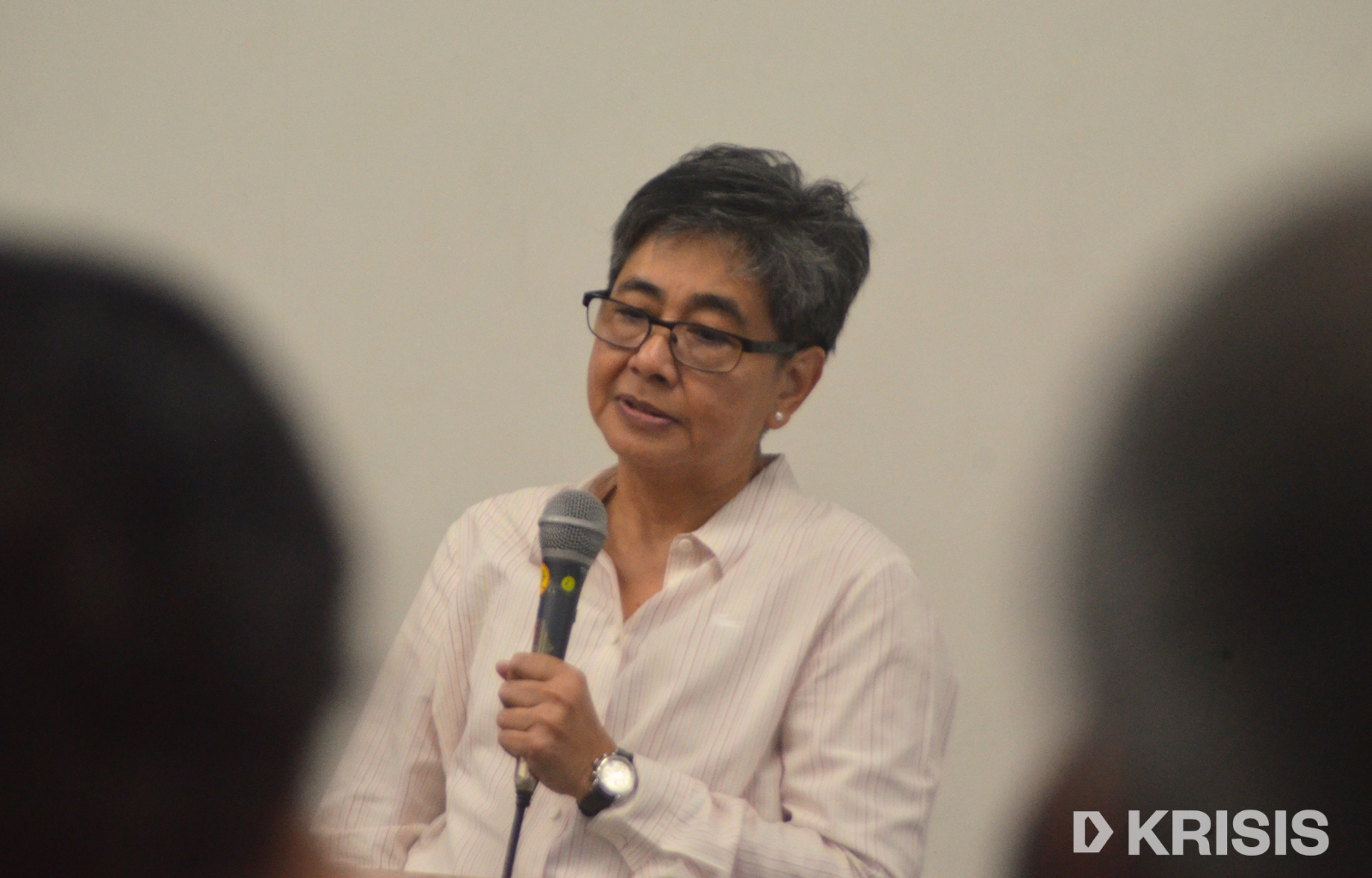
In a press conference hosted by human rights organization Karapatan today, May 7, Fortun bared her initial findings after conducting an autopsy on five out of the 19 victims of the Toboso killings.
The victims examined ranged from 22 to 40 years old; two were females, while the rest were male. The autopsies, conducted between April 25 and 29, revealed that the bodies were in varying staged of decomposition—many having been recovered from water.
A huge part of her initial forensic findings on the five bodies indicated that three victims had “multiple bullet fragments” with “really serious injuries,” three were shot in the head, all five of them were hit on the trunk, and—at least, in one case—the leg artery was also hit by a bullet, which caused bleeding. One of the five victims was also hit in the throat. There were also small abrasions and contusions which, in Fortun’s purview, could help investigators and fact-finding missions reconstruct the sequence of events.
Fortun also mentioned that the death certificates for all the victims are available in Negros, and that she requested copies of these. However, she hastened to add, some of these death certificates had “blank” causes of death.
Bullet fragments recovered from the five bodies, Fortun added, were “consistent” with the weapons used, which—to her mind—were generally “high-velocity rifles.” But the bigger question still, according to her, is what to do with the bullets.
She appealed to families of the remaining victims to delay cremation to allow for further forensic examination. Fortun also called for assistance in helping one family recover the correct remains of their loved one, revealing that the family of slain peasant activist Errol Wendel had been given the wrong body. She urged the Commission on Human Rights (CHR) to secure full access to all victims’ remains and other crucial evidence.
Fortun raised concerns over the handling of the investigation, pointing to apparent procedural lapses
“All of these cases should have undergone basic homicide investigation, which means basic CSI [crime scene investigation] pa lang, mayroon. Do we have that? Was that done? Was it documented?” Fortun asked.
Fortun singled out several inconsistencies with the procedural handling of the victims’ bodies after the killings. For instance, she mentioned that she only received two bundles of the victims’ clothes; one bundle was even sent without a label.
She then called out the lapses in the country’s investigation systems. While it is “inevitable” to commit mistakes in the absence of an efficient investigative system, Fortun also pointed out: “Ang problema… kung sino ang pumatay, siya ang nag-iimbestiga.” She added: “We are not science-based, and nobody questions it.” If no one questions it, Fortun lamented, “wala [nang] accountability, patayan nang patayan [na lang].” Moreover, Fortun asserted that, because the whole process of investigation is under the auspices of the same forces implicated in the case, the search for more substantial information becomes more arduous.
Fortun also questioned the supposed “paraffin test” conducted on the body of one victim, which circulated around social media in the last few days. “Thirty years ko nang tinitira ‘yung paraffin test na ‘yan. It’s useless, it’s junk,” she argued. “The fact na ipinagyayabang niyo pa… mahiya naman kayo. I’m sure that test was junk.”
During the open forum, a journalist asked Fortun if the victims were shot at a close range. It is hard to say, Fortun answered, because of the bodies’ decomposing condition.
Another journalist asked if the five bodies she examined had any indication of being combatants. Once again, Fortun said it is hard to say, because there are still limited pieces of evidence. She posed a question: “Bakit ang mga tama nila, nasa likod?”
In the end, the forensic pathologist—who became renowned for debunking the lies of police officers involved in some of the drug war killings under former president Rodrigo Duterte—has one thing to say, in the wake of the killings in Negros: “This is impunity… This is what we call a homicide. May pumatay eh. Wala bang accountability?”
But this is the Philippines, she sardonically declared, where killers routinely get away with murder. This is not the first case of killings where Dr. Raquel Fortun had not seen any measure of accountability, and if the questions arising from the bloodied sugarcane fields of Negros would remain clouded with smoke and mirrors, it might not be the last.