




There will always be people who side with the tillers, and those who side with the takers.
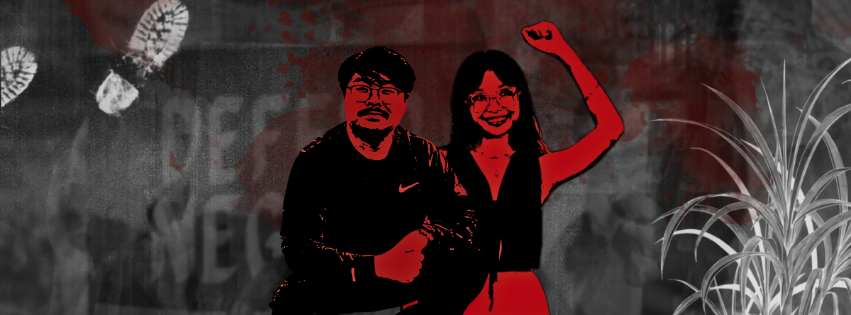
With the unfortunate deaths of 19 people in Salamanca, Toboso, Negros Occidental, which includes UP Diliman University Student Council Councilor Alyssa Alano and Paghimutad-Negros journalist RJ Ledesma, the barbarism of the Armed Forces of the Philippines (AFP) has terrorized the community of peasants who are already under threat of existing militarization.
Discourse surrounding the deaths of these individuals from the side of anti-progressive commentators boils down to one narrative: that they are red mercenaries, sent unconsciously to the countryside, to wreak havoc on the community. The question remains: Is their martyrdom justifiable?
Since 2018, the entire province of Negros Occidental has been under a state of lawless violence declared by the Philippine government, then also under former President Rodrigo Duterte, as a result of the Sagay Massacre that killed 9 farmers. Now that we are about 4 years into another president’s term, this declaration has not yet been lifted, and this has been used as justification for both the AFP and the PNP to continue their acts of violence in areas around Negros Occidental, including neighbouring Negros Oriental.
Going further back in time, the Escalante Massacre of 1985 echoed the same background of both killings. Much worse, the province was in a state of famine, which took the lives of children and infants due to severe malnutrition. The severe control of the once-monopolizing National Sugar Trading Corporation (NASUTRA) over the production of sugar, combined with the sudden crash of international sugar prices, aroused not only the sugarcane farmers but also other locals to organize and mobilize. State forces then attempted to suppress the protests with violence, causing the deaths of 20 to 30 people among those involved.
Now, in the events that transpired in Salamanca, Toboso, the indiscriminate firing displaced 653 people from their homes. The pattern of state intimidation brings fear to local sugarcane workers who still face problems with the crops they harvest.
The continuing power that hacienderos and major landlords such as the Cojuangcos, Yulos, and Lacsons hold over hundreds and thousands of acres forces farmers to farm in lands they do not own, and for whatever supposed profit they should have in selling harvest, is haggled in the lowest of prices. For those who are considered plantation workers, their salaries could barely reach half of provincial wage rates. These farmers and workers barely have anything to bring home to their families.
Alongside the situation in land ownership, corporate expansion affects the places these families live in. Road widening in Patag-Cadiz-Calatrava, coastal conversion for land resorts, and quarry mining in certain areas destroy the very lands on which these farmers stand, and cause uncertainty as to where they should reside.
There is no doubt that both the actions of state forces coincide with the priorities of landowners and businesses when it comes to forcing ordinary people out. The major incident that started last April 19 continues a long line of severe military attacks on the locals of Negros.
It is no surprise, then, that the existence of this “lawless violence” in the province did not start from certain individuals, or from so-called terrorist organizations, for the sake of exterminating people mindlessly. These are acts of resistance and not aggression. What could be defined as aggression comes from the state, and not from the people.
At this point, many are filled with sorrow over these losses. UP Diliman lost a valiant student-leader. The alternative media community lost a fearless journalist. Their families lost sons and daughters.
Alyssa, RJ, and all of those who were martyred on that day are victims, not of “brainwashing,” or “paid mercenary work,” but of state violence.
The same violence that ended sugarworkers in Sagay. The same violence that took the Fausto family in 2023. The same violence that abducted fisherfolk community leader Jose Macapobre of Candoni earlier this year. The same violence that shot farmers, workers, and civilians in the municipal plaza of Escalante five decades ago.
The history of the peasants of Negros, even beginning from the Spanish colonial period, centers around the fertile land, which stands the widespread array of sugarcane plantations all over the island. It is in the sweetness of the sugarcane juice that the bitterness of the blood that flows in that same land complements this continuing conflict between the powerful and the powerless. Are the Negrenses cursed to be stuck in this cycle of de facto martial law and capitalist takeover?
Like the Kanlaon Volcano that erupts with full intensity, the people of this island, and those outside who stand together with them, will eventually shake the system and turn all of this upside down, as long as there are those who are fully committed in their hearts, who defend the defenders, and who’ll side with the tillers.