



Student movements often present themselves as spaces of principle. They demand accountability from institutions and claim to practice those same standards internally. That claim becomes difficult to sustain when harm within these spaces is treated as something that can be deferred or set aside in the name of broader political goals.
This tension became visible in the recent UP Diliman student council elections.
In the College of Media and Communication, all candidates under ADVANCE CMC withdrew after failing to reach a consensus on whether to join the Sulong Tayo Coalition (STC), a university-wide alliance formed by independent candidates. Outgoing CMCSC Chairperson Ciro Quiapos stated that the withdrawal stemmed from the party’s inability to agree on how to respond to the coalition’s invitation, describing it as a “failure to reach a consensus” on the STC invite itself.
This disagreement did not emerge in isolation. Across UP Diliman, formations such as STAND UP, various college-based parties, and independent blocs have long differed on questions of political alignment, particularly in light of earlier controversies involving the handling of sexual harassment cases at the university-wide level. While these cases were addressed to some extent when raised, the manner in which they were handled left many details unclear to the broader student body, creating lingering uncertainty that continues to shape how groups approach alliances and coalition-building.
Some observers and participants have also suggested that these tensions may have influenced decisions around joining the STC, given perceptions that the coalition has connections to STAND UP. However, these views are not uniformly held, and others maintain that decisions around coalition-building are shaped by a broader set of strategic and organizational considerations beyond these concerns.
What appears as a procedural deadlock is better understood as a deeper conflict over whether unity can be pursued without first resolving issues of harm and accountability.
At its core, this raises a broader concern: student movements cannot meaningfully claim to be safe spaces if they treat harm as negotiable.
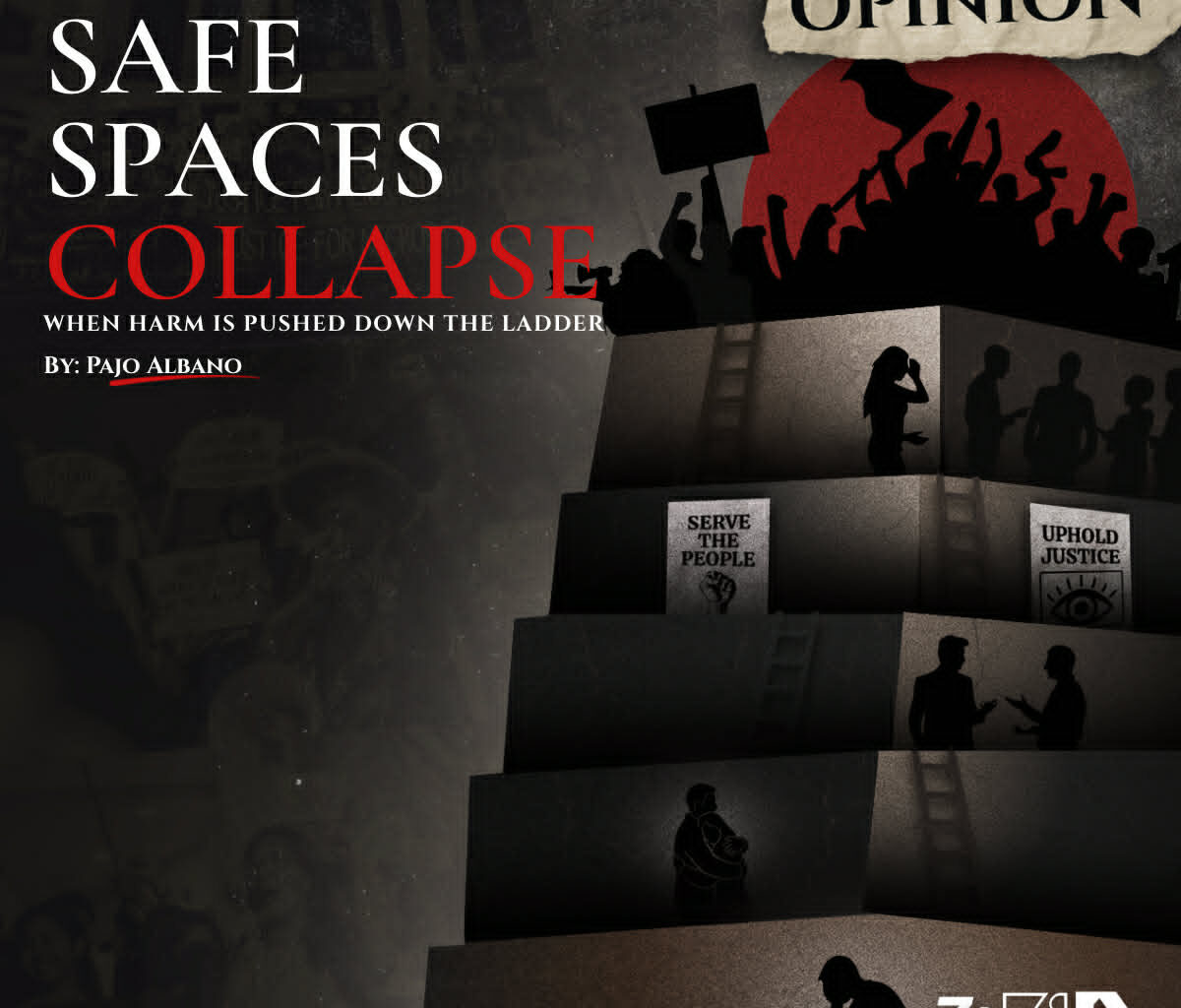
One problem is that movements tend to develop informal hierarchies of harm.
In practice, not all issues are treated with the same urgency. Public-facing concerns that are easier to mobilize are often prioritized, while interpersonal harms such as harassment or abuse are redirected into internal processes or delayed. These harms are acknowledged, but they are not always treated as decisive in shaping organizational decisions, especially when they complicate coalition work or disrupt momentum.
Organizational research helps explain this pattern. Jo Freeman’s work on informal hierarchies shows that even groups committed to equality develop internal structures that determine whose concerns carry weight. In environments shaped by what scholars describe as “mission-driven urgency,” there is a tendency to prioritize cohesion and forward movement, sometimes at the expense of addressing internal tensions.
This dynamic has visible effects on participation.
When harm is handled inconsistently, people adjust accordingly. Survivors may avoid meetings where the individuals involved in their experiences remain active and unaddressed. Members may hesitate to raise concerns because they anticipate being told that doing so will derail ongoing campaigns. Others disengage altogether, not because they reject the movement’s goals, but because participation becomes difficult to sustain under these conditions.
Studies on campus-based gender violence reflect similar patterns. Survivors often encounter responses that weigh their experiences against the perceived needs of the collective. Harm is not necessarily dismissed, but it is treated as something to be managed alongside other priorities. In these situations, accountability becomes conditional rather than consistent.
A second problem is that unresolved harm directly shapes political alignment.
The impasse in CMC illustrates how past controversies continue to influence present decisions. The earlier disaffiliation from STAND UP, following issues in the handling of sexual harassment cases, created a lasting sense of distrust. For some groups, this history makes alignment difficult without clearer forms of accountability. For others, coalition remains necessary despite these unresolved concerns.
What emerges is a disagreement over thresholds. Some organizers are willing to move forward in the interest of unity, while others see unresolved harm as a sufficient reason to withhold alignment. This is not simply a strategic divide. It reflects fundamentally different positions on whether political goals can be separated from the conditions under which organizing takes place.
Political theory underscores why this distinction matters. The legitimacy of a movement is shaped not only by its goals but by how it pursues them. Internal accountability is not external to political struggle; it is one of the conditions that makes collective action credible. When movements consistently deprioritize certain harms, they risk reproducing the same patterns of exclusion that they claim to oppose.
Student movements are not exempt from these contradictions.
They operate under pressure, with limited time and competing demands. The push to build unity in the face of larger systemic issues is real. However, this pressure does not remove the responsibility to address harm in a clear and consistent manner.
If student movements are serious about being safe and accountable spaces, then internal responsibility cannot remain secondary. It has to be treated as part of organizing itself. This means confronting unresolved issues directly, establishing clearer expectations around accountability, and recognizing that unity built on deferred harm is inherently unstable.
Without these efforts, the problem is not only whether movements can organize effectively, but whether they can sustain spaces where people are willing and able to participate.